

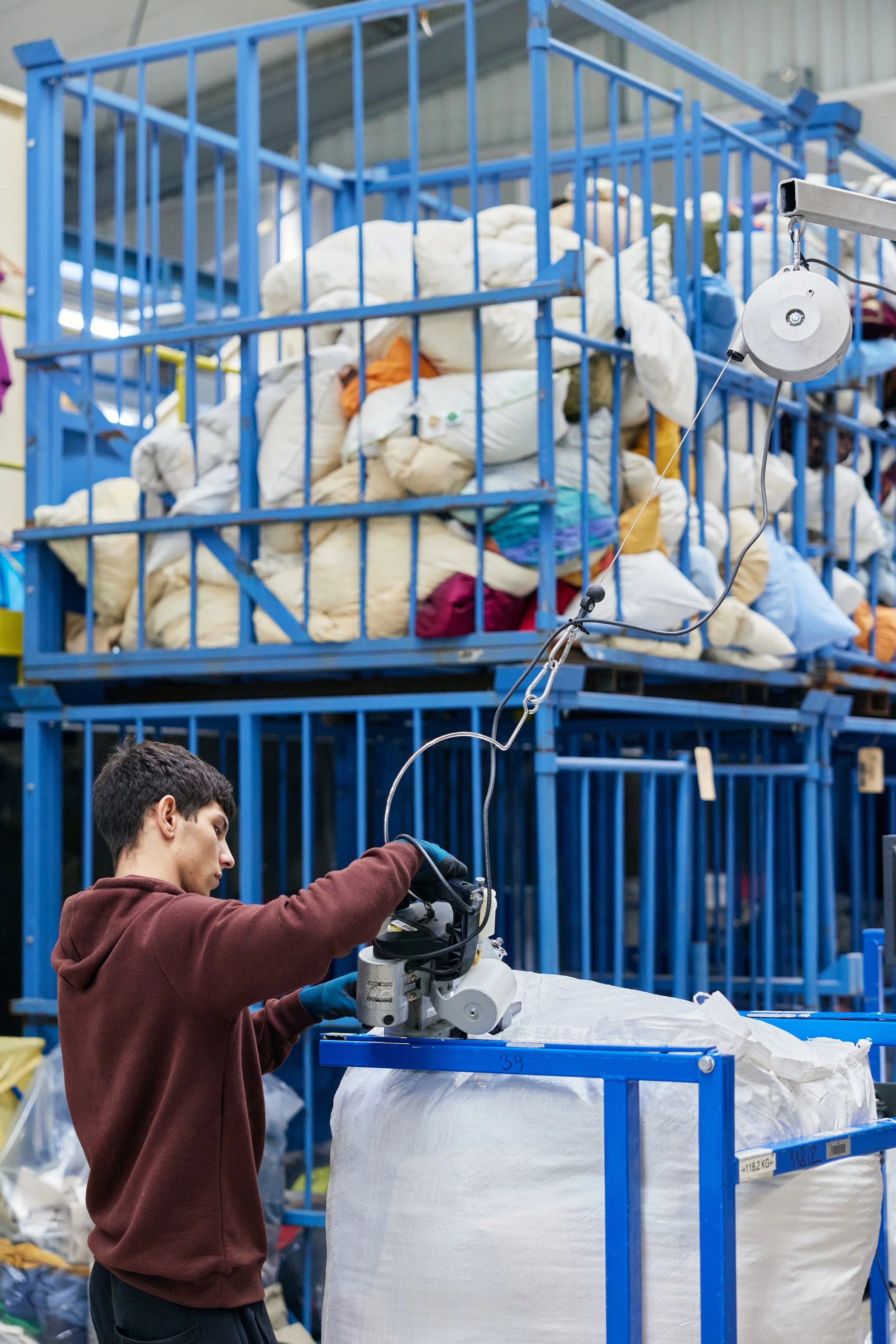
Die Realität unserer Arbeit.
Jährlich werden in Europa mehr Kleidungsstücke entsorgt, als gebraucht gekauft werden. Wir finden das wiedersrpüchlich und arbeiten täglich daran, Textilien so lange wie möglich im Umlauf zu halten, indem wir einen Ausgleich zwischen lokaler Wiederverwendung, globalem Weiterverkauf, Recycling und Transparenz schaffen.
Warum ein zweites Leben für Kleidung zählt.
In Europa werden jedes Jahr mehr Kleidungsstücke weggeworfen als gebraucht gekauft. Deshalb finden wir es wichtig, dass Kleidungsstücke eine Chance auf ein zweites Leben erhalten.
Wir sorgen dafür, dass Kleidungsstücke neue Träger:innen finden und dadurch länger genutzt werden.
Warum Reuse zuerst - auch wenn Textilien Reisen müssen?
Die Wiederverwendung von Kleidung ist der beste und direkteste Weg, dem hohen CO₂ Ausstoß der Textilbranche entgegenzuwirken. So behaupten einige Studien, dass die Wiederverwendung eines Baumwoll-T-shirts 2-3 kg CO₂-Äquivalente einsparen kann. Dabei ist es am effizientesten, wenn die Kleidung am selben Ort wiederverwendet wird. Doch auch ein Export der Kleidung ist nachhaltiger als die Entsorgung und Neuproduktion.
Die EU-Abfallhierarchie gibt vor, mit welcher Priorität mit Materialien nach ihrem ersten Produktleben umgegangen werden soll. Die Wiederverwendung steht hier an der Spitze der Pyramide. Da in Europa viele Kleidungsstücke ausrangiert und im Verhältnis wenig Secondhand gekauft wird, nutzen wir weltweite Partnerschaften, um die Reuse-Ware zu verkaufen. Hierbei achten wir besonders auf Händler:innen, die ihre Kundschaft gut kennen und wissen was diese gerne kauft.
Entgegen den Erwartungen: Textilrecycling ist noch nicht großflächig verfügbar.
Für viele Menschen gilt das Recycling als naheliegende “Standardlösung”. Tatsächlich sind die globale Textilrecycling-Branche und die dafür notwendigen Technologien noch unterentwickelt.
Die Sortierung für das Recycling allein ist wirtschaftlich kaum tragfähig. Entsprechend gering ist die Nachfrage nach geeignetem Recyclingmaterial. Insgesamt handelt es sich hier um einen komplexen Bereich, in dem sich deutlich mehr Akteure zusammenschließen müssen, damit sich Fortschritte langfristig überhaupt entfalten können.
Was wir wissen, und was nicht.
Wir können bei Millionen Kleidungsstücken leider nicht jedes einzelne Teil nachverfolgen, wenn sie unsere Anlagen verlassen. Das heißt aber nicht, dass wir gar nicht wissen, was mit der Kleidung passiert.
Wir analysieren unsere Verkäufe nach Kleidungstyp, Qualität und Reiseziel. Wir wissen, was uns verlässt, wohin es geht, und zu welchem Zweck. Wir führen regelmäßig unsere “Deep Dives” durch. Das bedeutet wir reisen zu unseren Zielorten, wie Togo, der Ukraine, oder der Elfenbeinküste, um zu sehen, wie unsere Kleidung dort verkauft wird. Das hilft uns zu verstehen, was jeweils vor Ort passiert und wie wir unsere Systeme anpassen können.
Unsere Verantwortung
Die Welt, in der wir arbeiten ist sehr Komplex und auf keinen Fall perfekt. Aber das ist mit ein Grund, warum wir tun was wir tun. Die Herausforderungen schrecken uns nicht ab, sondern ermutigen uns, Teil zu haben und einen positiven Einfluss zu nehmen. Wir möchten lernen, anpassen, und bessere Lösungen für Alttextilien finden.
Unsere Verantwortung ist eindeutig:
Weiterverwendung von Textilien ermöglichen.
In Innovation investieren, um Textilrecycling zu erweitern und mehr Möglichkeiten zu schaffen.
Für Transparenz sorgen, darüber wie Textilien sich weltweit bewegen und zu welchen Zwecken.
Mit jeder Entscheidung, die wir treffen bewegen wir uns mehr und mehr in ein System, in dem Kleidung niemals zu Abfall wird. Und jedes Kleidungsstück, dass eine zweite Chance bekommt führt uns einen Schritt näher an dieses Ziel.
Was Sie tun können.
Bringen Sie ihre Kleidung zu verantwortungsvollen Sammelstellen und kaufen Sie, wenn möglich Secondhand. Die Wiederverwendung ist aktuell die stärkste Waffe gegen die Umweltverschmutzung durch Textilien.